Animal House
Ethical Animal Care for Teaching and Research
The Animal House at the Department of Zoology, ABU Zaria, provides ethical, humane, and high-quality housing for laboratory animals used in research, teaching, and experimentation, in compliance with national and international welfare standards.
About the Animal House
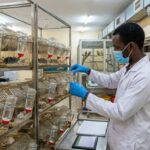
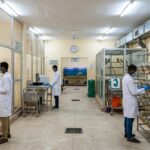
The Animal House is a dedicated facility within the Department of Zoology, ABU Zaria, designed to house and care for laboratory animals used in research and teaching. The facility prioritizes animal welfare, ethical treatment, and compliance with institutional and national guidelines for the use of animals in scientific research.
The Animal House supports:
Teaching: Practical demonstrations of animal handling, physiology, and behavior for undergraduate and postgraduate students.
Research: Controlled housing for studies in pharmacology, toxicology, parasitology, nutrition, and other biomedical sciences.
Ethical Training: Hands-on training in humane animal handling, enrichment, and experimental design.
Our Standards & Compliance
Animal Welfare
The facility adheres to the 3Rs principle (Replacement, Reduction, Refinement) to minimize animal use and suffering.
Ethical Oversight
All research protocols involving animals are reviewed and approved by the ABU Institutional Animal Care and Use Committee (IACUC).
Housing & Enrichment
Caging, bedding, nutrition, and environmental enrichment are provided to meet species-specific needs and promote natural behaviors.
Species Housed
The Animal House houses a range of small laboratory animals commonly used in zoological and biomedical research, including:
| Species | Common Uses |
|---|---|
| Mice (Mus musculus) | Genetics, toxicology, pharmacology, parasitology, behavior studies |
| Rats (Rattus norvegicus) | Physiology, nutrition, toxicology, learning and behavior research |
| Guinea Pigs (Cavia porcellus) | Immunology, nutrition, vaccine development |
| Rabbits (Oryctolagus cuniculus) | Antibody production, dermatology, reproductive studies |
| Frogs (Xenopus laevis) | Developmental biology, physiology, ecotoxicology |
| Fish (e.g., zebrafish) | Developmental genetics, ecotoxicology, behavioral studies |
Please note: The department does not house wild-caught or endangered species without specific approval and appropriate permitting.
Requesting Access to the Animal House
Access to the Animal House is restricted to:
- ABU staff and students with approved research protocols
- External researchers with valid institutional approval and collaboration agreements
Requirement | Details |
Research Approval | Approved research protocol from ABU IACUC |
Training | Completion of animal handling and welfare training |
Supervision | New users must be supervised by experienced handlers |
Health Clearance | Proof of tetanus vaccination and any other required immunizations |
Requirements for Access:
How to Request Access:
To request access to the Animal House for research or teaching purposes, please:
- Submit a completed Animal House Access Request Form (available from the department office)
- Attach your approved IACUC protocol
- Provide evidence of training completion
- Submit to the Head of Department or Animal House Manager
Visiting the Animal House
| Information | Details |
|---|---|
| Location | Department of Zoology, Faculty of Life Sciences, Ahmadu Bello University, Main Campus, Zaria |
| Access Hours | By appointment only – Monday to Friday, 9:00 AM – 4:00 PM |
| Tours | Guided tours available for researchers, institutional visitors, and students (by prior arrangement) |
Contact for Visits:
To schedule a tour or discuss facility access, please contact:
Animal House Manager
Email: animalhouse@abuzariazoology.org.ng
Phone: +234 800 300 4002
Health & Safety
The Animal House operates under strict health and safety protocols to protect both animals and personnel:
Personal Protective Equipment (PPE): Gloves, lab coats, and closed-toe shoes are mandatory in animal housing areas.
Zoonosis Prevention: Handwashing stations, disinfectants, and separate changing areas are provided.
Waste Disposal: Biological waste, bedding, and carcasses are disposed of according to ABU and NESREA guidelines.
Emergency Procedures: Fire, spill, and animal escape protocols are posted in all animal rooms.
Collaborative Research
The Animal House welcomes collaborative research with:
- Other departments within ABU (e.g., Human Physiology, Pharmacology, Veterinary Medicine)
- Nigerian universities and research institutes
- International research partners
For collaboration enquiries, please contact the Head of Department.
Animal House Enquiries
Animal House Gallary